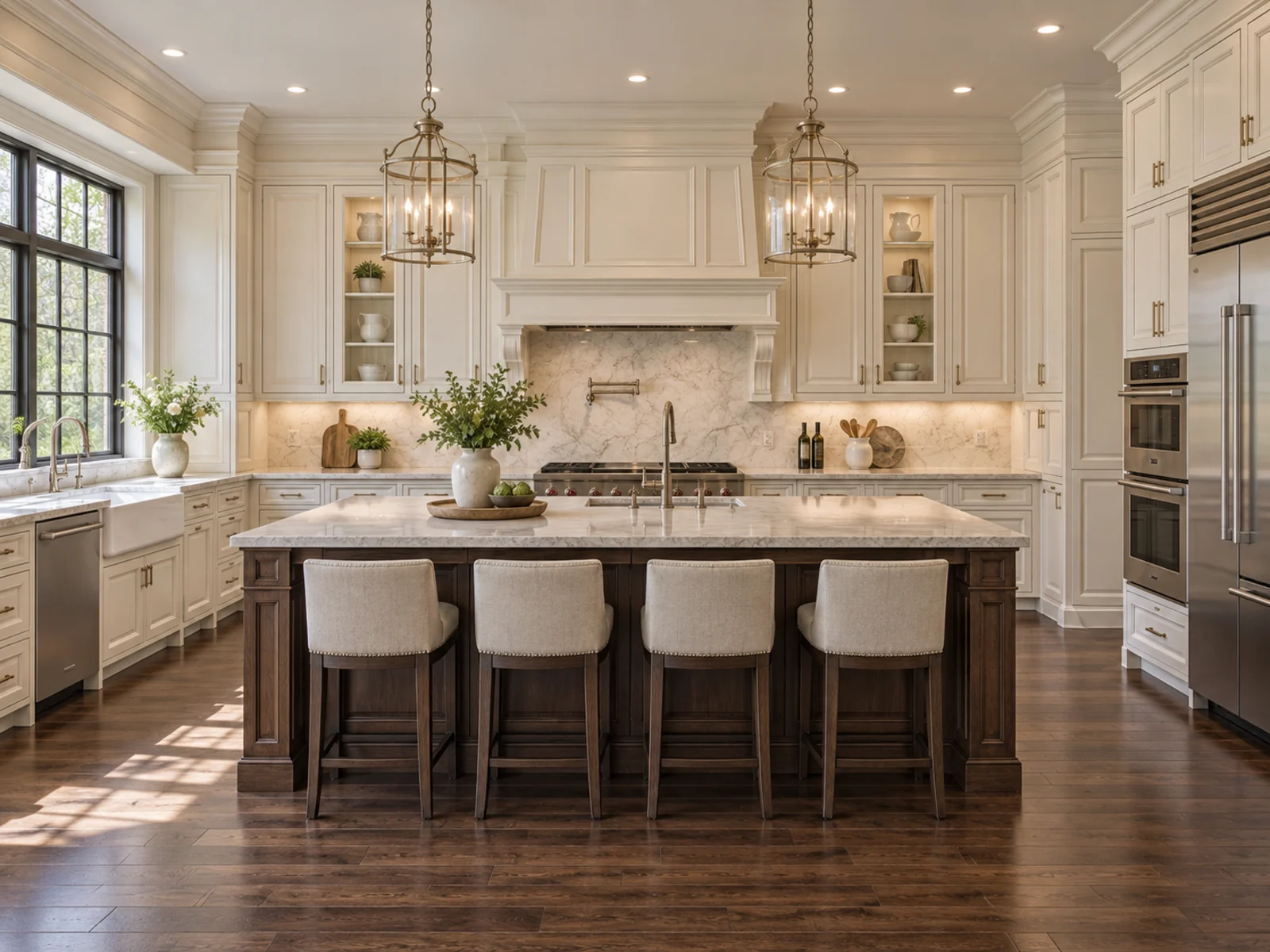
Traditional kitchens use profiled cabinet doors, layered mouldings and carefully placed architectural details to create a more formal, furniture-inspired composition. The result may be restrained or richly detailed depending on the selected profiles, finishes and focal features.
The Details That Define a Traditional Kitchen
Traditional cabinetry is recognized through visible profile depth, layered mouldings and selected architectural details. The number and complexity of these elements can vary, but they should read as one coordinated design language.
Door Profiles and Panel Detail
Traditional cabinet doors are recognized by visible frame-and-panel depth. Raised centre panels, shaped inside edges, mitered corners and applied mouldings can create a more formal appearance, while simpler profiled doors can keep the result restrained.
Crown and Layered Mouldings
Crown moulding gives traditional cabinetry a finished architectural transition at the ceiling. It may use one defined profile or several coordinated layers, with selected valances, light rails or furniture-style trim adding further depth.
Mantel-Style Range Hoods
A mantel-style wood range hood can become the main architectural feature of a traditional kitchen. Its surround, decorative panel, apron and moulding should coordinate with the crown and cabinet door profiles.
Glass and Display Details
Mullion glass doors, framed display cabinets and selected open details can break up solid cabinetry and introduce a lighter decorative layer. These features work best when their profiles coordinate with the surrounding doors and mouldings.
Furniture-Inspired Details, Inside and Out
Traditional cabinetry can extend its furniture-like character through both visible architectural details and carefully selected interior components.
Posts, Corbels and Furniture Details
Pilasters or decorative posts beside the cooking area, carved corbels below an island overhang, furniture legs and framed end panels can give traditional cabinetry a built-in, furniture-like character. Their profiles should coordinate with the doors and mouldings rather than introduce an unrelated decorative language.
Solid-wood dovetail drawer boxes can be paired with wood cutlery inserts, divided utensil drawers, peg organizers and solid-wood roll-out trays. These are optional specification choices, and available materials and configurations are confirmed for each project.
Traditional kitchens feel composed when one area carries the strongest architectural detail and the surrounding cabinetry supports it.
Let the Hood Wall Lead
A centred mantel-style range hood can serve as the main focal point. Coordinate its panel, trim and side pilasters with the crown and surrounding cabinet doors.
Use the Island as a Secondary Feature
Corbels, furniture legs, posts or framed end panels can give an island a furniture-like presence. They should echo the profile language of the hood wall without competing with it.
Keep Supporting Cabinetry Quieter
Repeat selected profile and moulding details rather than using every decorative element throughout the room. Quieter cabinet runs allow the hood wall and island to remain visually clear.
Customer Gallery
Completed Roomidea projects showing profiled cabinetry, layered mouldings and furniture-inspired details across kitchens and a basement bar.
Layered White Cabinetry with a Dark Island
White profiled cabinetry, layered crown moulding, illuminated glass cabinets and a mantel-style hood are balanced by a dark furniture-style island.
Rich Wood Cabinetry with a Metal Hood
Rich wood cabinetry, stacked crown moulding and a broad metal range hood create a warm traditional kitchen centred on a storage island.
Glass Displays with a Contrasting Island
Warm white profiled cabinetry and illuminated glass displays surround a compact dark island, with tall cabinetry framing the built-in appliances.
Traditional Basement Bar
Arched glass display doors, a diamond wine rack and decorative supports give this basement bar a furniture-inspired character.
Before Your Design Consultation
Door profiles and moulding references you like
Whether the detail level should feel restrained or more layered
Preferred hood-wall and island focal features
Interest in solid-wood drawers or wood organizers
Room dimensions, appliance information and general planning requirements are covered in the Kitchen Cabinets planning guide. Detailed production dimensions and final specifications are confirmed through the Roomidea design and measurement process.