
What You Store
Clothing, shoes, jewellery, belts, ties, bags, and other personal items each call for different storage functions and proportions.
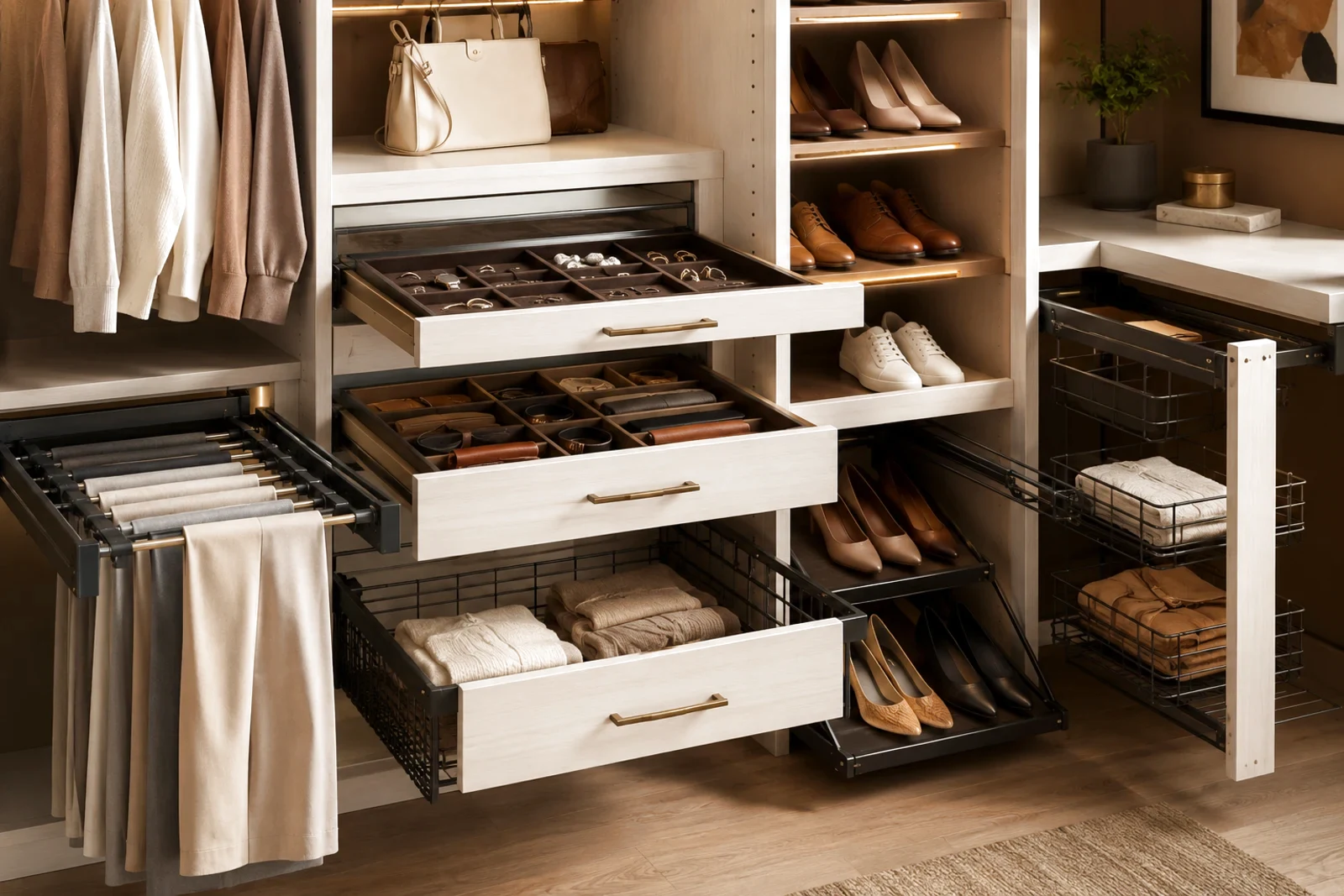
Explore custom closet accessories and storage features for hanging, shoes, jewellery, folded clothing, bags, and everyday dressing. Roomidea can source third-party accessories and coordinate them with the cabinet layout, available space, door movement, and the way you use your closet.
Start with the clothing, shoes, jewellery, bags, and other personal items that need a home. Their quantity, size, frequency of use, and the available cabinet space help determine the main hanging, shelving, drawer, and shoe-storage zones before individual accessories are selected.
Clothing, shoes, jewellery, belts, ties, bags, and other personal items each call for different storage functions and proportions.
Daily items should remain easy to see and reach, while less frequently used belongings can be assigned to higher or deeper storage zones.
Pull-out, rotating, and pull-down closet organizers need enough cabinet width, depth, and height to operate as intended.
Drawers, doors, baskets, mirrors, and other moving accessories need clear opening paths and separation from adjacent components.
Establish the main storage zones first. Accessories should improve access and organization without reducing essential hanging, shelving, drawer, or lower-storage capacity.
Set the amount of long and double hanging around the actual mix of dresses, coats, shirts, jackets, and trousers before adding specialty hardware.
Flexible shelf spacing supports folded clothing, bags, and changing storage needs without giving up useful cabinet capacity.
Drawer width, depth, and location should be established before selecting inserts, dividers, locks, or interior fittings.
Lower zones should balance footwear and flexible storage with long garments, drawer movement, and comfortable everyday access.
Select hanging accessories around the available cabinet width, mounting position, reach, and the clear space needed for each mechanism to move.
A closet pants rack keeps trousers separated and visible. Cabinet width, mounting position, and complete extension clearance need to be confirmed.
Fixed hooks or pull-out organizers can be selected around the number of items, their length, and the most convenient point of use.
A valet rod provides temporary hanging space for organizing an outfit or preparing clothing. Its extension direction must remain clear of doors and circulation paths.
A compatible pull-down lift can make a higher hanging zone easier to reach. The final position and mechanism depend on cabinet dimensions and current product availability.
Drawer accessories can create defined storage for jewellery, watches, clothing, and personal items once the drawer dimensions and daily-use priorities are established.
Divided, soft-lined jewellery drawer inserts can organize rings, watches, and smaller personal items while keeping them easy to review.
Closet drawer dividers can create adjustable sections for socks, undergarments, ties, and other small items as storage needs change.
Interior drawers can organize personal items with a compatible soft-close system. Hardware details depend on the selected drawer construction.
A locked drawer or concealed storage area can be reviewed where suitable cabinetry and compatible hardware are available for the project.
Footwear, handbags, folded clothing, and accessories benefit from different shelf angles, spacing, visibility, and movement clearances.
Angled shelves make the front of each shoe easier to see, but their slope and spacing can reduce the vertical capacity available in the cabinet.
Pull-out shoe racks can improve access in deeper sections when the cabinet and surrounding room provide space for full extension.
Ventilated pull-out closet baskets can hold folded clothing, accessories, or other flexible storage while keeping the contents visible and accessible.
Adjustable shelves and vertical dividers can support different bag heights while helping structured handbags retain their shape.
Mirror placement and closet lighting should be coordinated with cabinet openings, electrical preparation, controls, and the way the dressing area is used.
A mirror can be fixed, door-mounted, or installed on a compatible pull-out mechanism. The final approach depends on available space and hardware compatibility.
Under-shelf LED lighting can improve visibility across hanging sections, shoe storage, and selected display areas.
Lighting within drawers or cabinets can make deeper storage zones and smaller personal items easier to see.
Door, motion, or proximity activation can be reviewed according to the selected components, controls, wiring, and site electrical conditions.
Accessory selection is finalized after the cabinet dimensions, door and drawer movement, preferred finishes, and current product availability have been reviewed together.
Each accessory must match the available cabinet width, depth, height, and panel construction.
The layout must confirm that an accessory will not conflict with hinged doors, sliding doors, drawers, or other moving parts.
Final brands, models, colours, and mechanisms are confirmed from current availability and the samples available for review in the Roomidea showroom.
Feature images on this page illustrate common storage functions and design ideas. Accessory brands, models, dimensions, finishes, and mechanisms may vary. Roomidea can source third-party closet accessories and coordinate compatible options with the cabinetry. Visit the Roomidea showroom or contact us to review current samples and confirm the final selection.
Share your closet layout, the items you need to organize, and the features that would make the space easier to use. Roomidea can review current options and coordinate suitable accessories with the overall closet design.